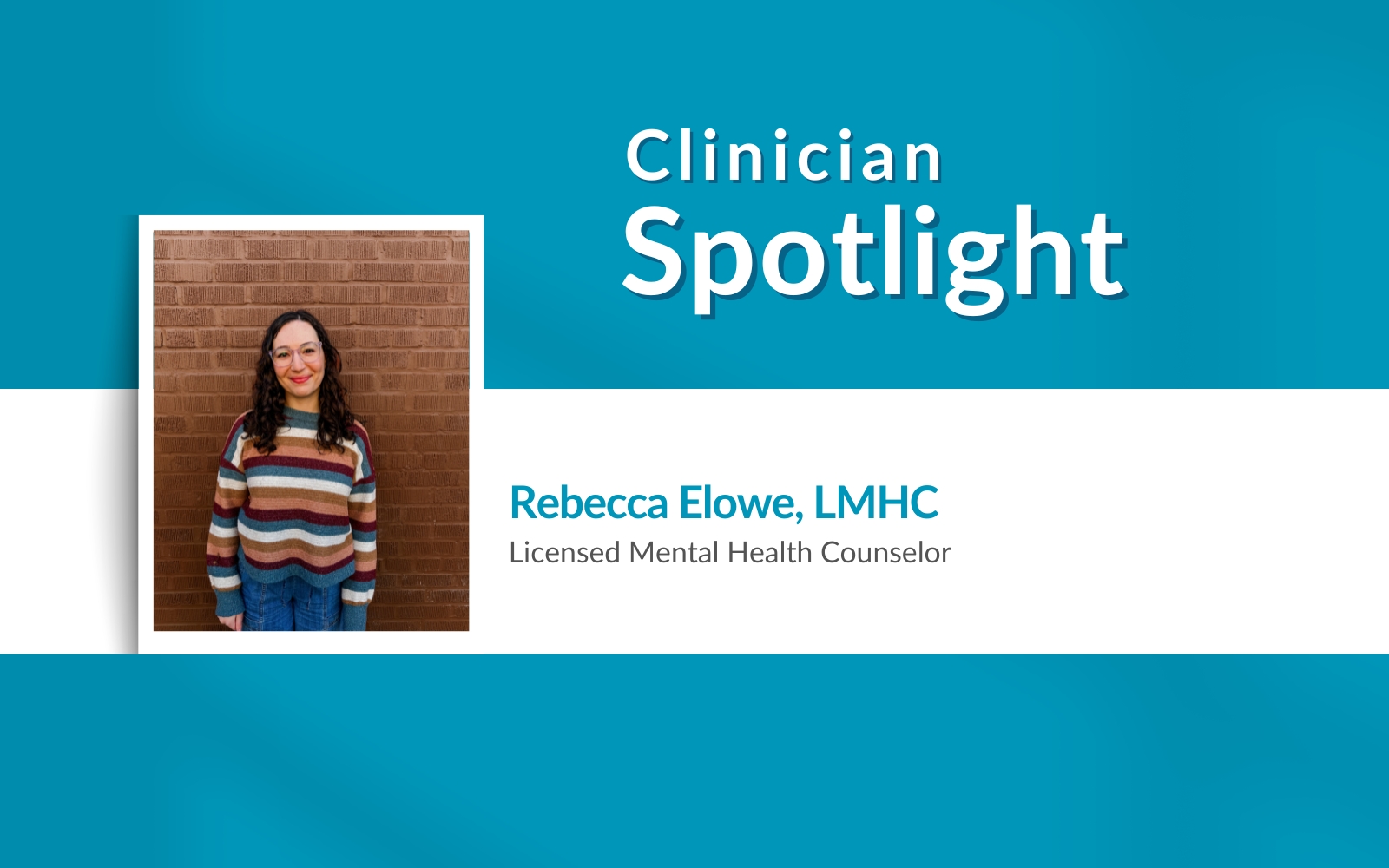
Rebecca Elowe, LMHC, approaches therapy with curiosity, empathy, and deep respect for each person’s story. She believes meaningful change begins when people feel safe enough to explore how their past experiences shape their present lives—and empowered enough to decide where they want to go next.
Rebecca views therapy as a collaborative process built on trust and reflection. Rather than positioning herself as an authority, she works alongside patients as they explore their experiences and develop new ways of relating to their thoughts, emotions, and relationships. As Rebecca explains, “The patient is the leader on the journey, and I see my role as a guide in the passenger’s seat.”
Specialty & Approach to Therapy
Rebecca works with individuals navigating anxiety, obsessive-compulsive disorder (OCD), and trauma-related challenges. She recognizes that anxiety itself is a natural and protective response.
“Everyone experiences anxiety to some degree, it’s a survival mechanism that can help keep people safe,” she explains. “But when fears and worries begin to interfere with living the life someone hopes for, therapy can help explore and challenge those anxieties.”
Her therapeutic approach combines psychodynamic and person-centered therapy with creative and evidence-based methods. Rebecca helps individuals explore how present challenges may connect to earlier experiences, creating space for deeper understanding and growth.
In addition to talk therapy, Rebecca is a trained drama therapist, incorporating storytelling, metaphor, and role exploration into sessions. She is also trained in Eye Movement Desensitization and Reprocessing (EMDR) therapy, an evidence-based approach that supports individuals in processing trauma and reducing emotional distress.
Advice for Those Seeking Mental Health Care
Rebecca acknowledges that starting therapy can feel intimidating and that the self-reflection involved can be emotionally demanding.
“The self-reflection required in therapy is hard work,” she notes. “It’s normal to feel tired by it sometimes.”
She encourages individuals to remain open about how the process feels. Therapy can involve discomfort, but discussing those feelings openly can lead to more personalized and supportive care.
When choosing a provider, Rebecca emphasizes patience. Building a strong therapeutic relationship takes time, and it’s okay if the connection doesn’t feel immediate. At the same time, she encourages individuals to trust their instincts and find a therapist whose approach feels like the right fit.
Finding Balance Through Self-Care
Outside of her clinical work, Rebecca values simple routines that help her decompress and reset after the day. One of her favorite ways to unwind is writing down the thoughts that are still circulating in her mind.
“Putting those thoughts on paper helps me leave work at work,” she says.
She also makes time for hobbies like watching favorite shows, creating art, following sports, and caring for her cat — small moments that help restore balance and creativity.
Reach out to learn more or find a clinician who aligns with your needs!