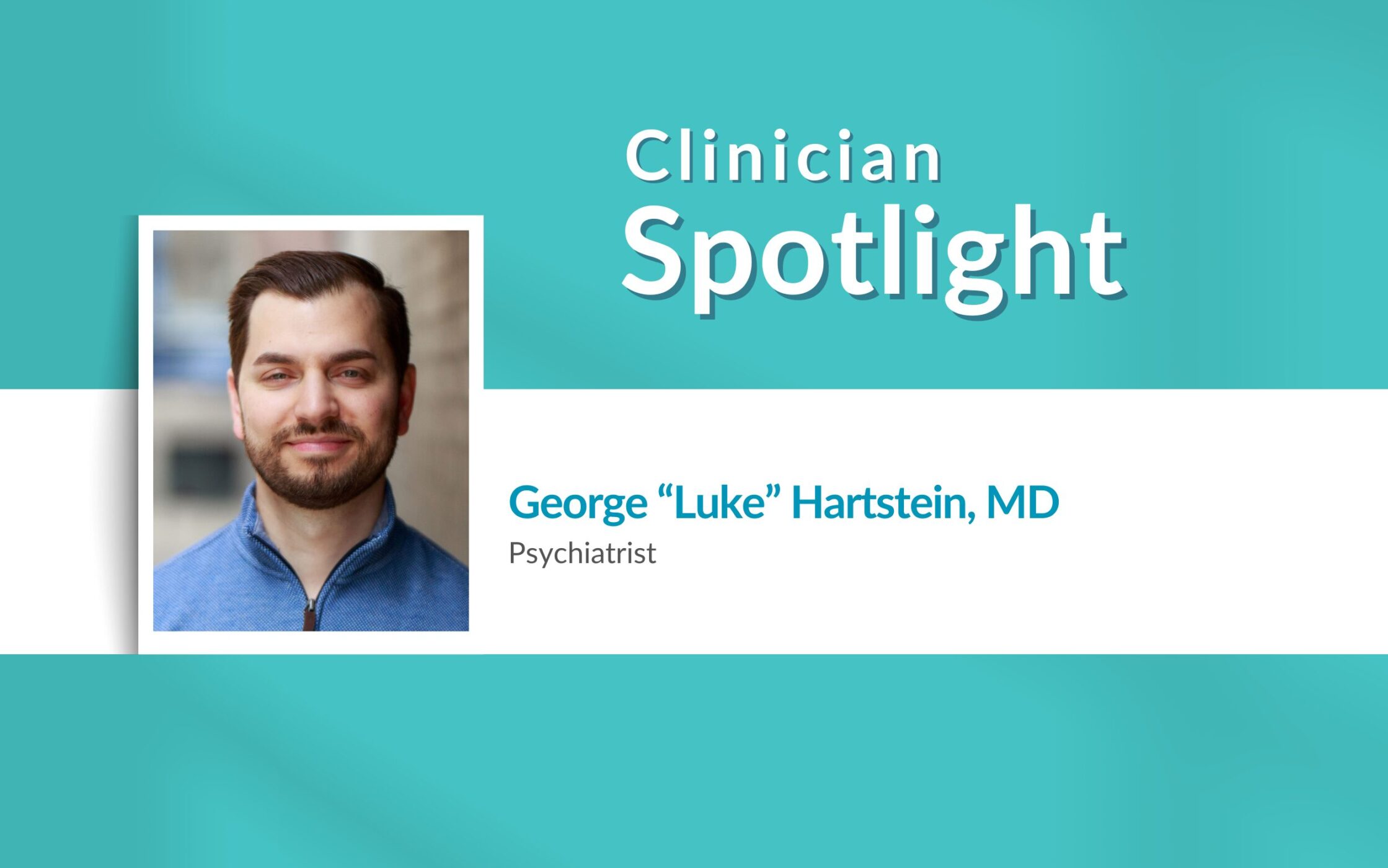
Welcome to the latest Rivia Mind Clinician Spotlight! We’re delighted to introduce Dr. George “Luke” Hartstein, a psychiatrist who blends curiosity, compassion, and clinical precision to help patients understand and reshape their experiences. Luke recently shared his perspective on therapy, his approach to the therapeutic relationship, and how he maintains balance in his own life. Here’s what he had to say:
Specialty & Approach to Therapy
Luke specializes in anxiety disorders, panic, and OCD, conditions that can feel all-encompassing, yet are deeply responsive to the right kind of care. “Anxiety is part of the mind’s threat-detection system,” he explains. “It helps keep us safe by alerting us to danger. But sometimes that system becomes overactive, labeling things as dangerous when they’re not, including internal experiences like thoughts, feelings, or physical sensations.”
He describes anxiety as a learned cycle that therapy can help interrupt. “Avoidance might ease anxiety in the short term,” Luke notes, “but over time, it teaches the brain that the feared situation is dangerous, reinforcing the anxiety and perpetuating the cycle.” Through therapy, patients learn to remove the “threat label” that’s been misapplied, and work compassionately with the parts of themselves that carry fear and worry to create a space for calm, clarity, and connection.
“My approach draws from several modalities—including Internal Family Systems (IFS), Cognitive Behavioral Therapy (CBT), Acceptance and Commitment Therapy (ACT), and psychodynamic and psychoanalytic therapy,” Luke shares. “Therapy is a space to collaboratively explore the patterns that shape how we think, feel, and act. By bringing awareness to the unconscious dynamics that influence us, we gain the clarity and flexibility to live more intentionally and authentically.”
Advice to Those Seeking Therapy
“Some people begin treatment with clear goals or expectations. Others feel unsure and don’t know what to expect,” he says. “Both experiences are completely normal.”
Luke encourages patients to bring their feelings into the therapeutic conversation itself. “Exploring your thoughts about the treatment process with your therapist or psychiatrist can be especially helpful,” Luke adds. “These conversations build a shared understanding of what effective, meaningful work will look like for you.”
He also emphasizes that finding the right fit takes time, and that “fit” doesn’t always mean comfort. “A good therapeutic relationship is grounded in trust, but that doesn’t mean treatment is always easy,” he explains. “Often, the most meaningful growth happens in moments that feel challenging.”
He encourages clients to speak openly about their experiences within therapy. “The relational patterns that appear in everyday life tend to surface in therapy as well,” Luke says. “What makes therapy unique is that it provides a safe, intentional space to explore those patterns as they unfold. Over time, that process helps people build insight and relational skills they can carry into the rest of their lives.”
Finding Balance Through Self-Care
For Luke, self-care is about the connection to the body, mind, and community. He prioritizes staying active, spending time with people who matter most to him, and maintaining a consistent practice of mindfulness and self-reflection. These routines help him stay grounded and present, both in his work and in his personal life.
Taking the first step toward mental wellness can feel daunting, but you don’t have to navigate it alone. Providers like Dr. Hartstein offer a space that’s collaborative, compassionate, and rooted in evidence-based care. Reach out to learn more and get connected today.