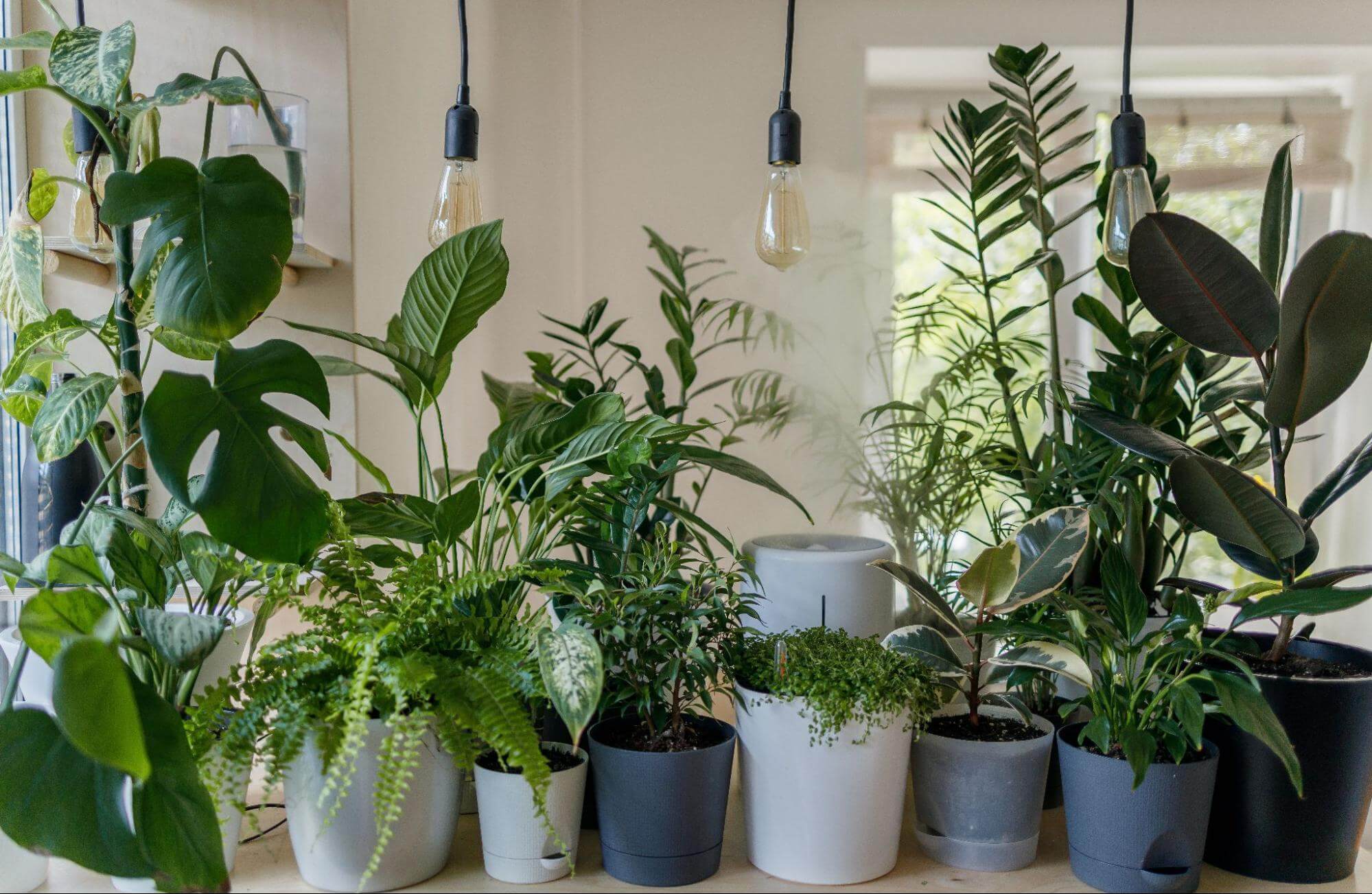
There’s something about a houseplant that can just brighten up a room. Adding a little potted plant to your window sill or creating a plant shelf near a window of your home may be an exciting prospect, but can these houseplants actually make you happier?
You may or may not be surprised to find that house plants can actually have a positive impact on your mental health. Let’s discuss the mental health effects of houseplants in today’s blog.
The Science Behind Houseplants and Mental Health
Back in 2015, a study was published in the Journal of Physiological Anthropology about the impact of houseplants on the mental health of young adults. 24 young adults were studied. 12 were given the task of transplanting an indoor plant; 12 were given a task on the computer. By studying their heart rate variability and blood pressure, the study found a healthy heart rate and decrease in blood pressure from those who worked with the indoor plant. The opposite was true of those with the computer task.1 The 12 taking care of the indoor plant also reported feeling more comfortable and at ease throughout the task.
Both of these tasks took place indoors. So how was the indoor plant task so much more soothing than the computer task? The conclusion was that the interaction with the indoor plant caused a suppression of the sympathetic nervous system, responsible for stress responses, and diastolic blood pressure. This leads to more feelings of calm and happiness.
The Mental Health Benefits of Houseplants
So there has been solid evidence that time spent around houseplants can have an impact on your mental health, and that benefit is a positive one. But what are some of the other benefits of houseplants on your mental health? Here are a few that stand out:
Reduced Stress and Anxiety
An article from Time Magazine entitled “Indoor Plants Have Surprising Health Benefits. Here They Are” referenced the same study that was posted in the Journal of Physiological Anthropology. They also interviewed Melinda Knuth, an assistant professor of horticultural sciences at North Carolina University.
According to Knuth, “We see a clear connection with the fact that being around plants improves cortisol levels in our body.”2 She states this is because we hold cortisol, the stress hormone, in our saliva, which is decreased around plants. Another study conducted on patients in a hospital waiting room found that their stress was reduced looking at both real plants and photographs of plants or artificial plants.3
Increased Attention
Increased Happiness
A Sense of Responsibility
Plants can help you feel more calm, happy, and concentrated. They are also a responsibility. You have to care for houseplants to keep them healthy and vibrant. They need the right amount of sunlight, water, trimming, and so on. While the care is minimal, it can also give you a sense of pride. You are nurturing a life, however small. For those who want to take care of something but don’t feel ready for a pet or in a place to have children, a plant can be a great way to motivate you not to fall into a vegetative depression.
Houseplants have a number of benefits on your mental health. However, of course, they are not meant to be a replacement for therapy or medication management. If you are struggling with your mental health, it’s always best to reach out to a mental health professional to receive treatment. A houseplant can be a supplemental help. For treatment, Rivia Mind has you covered. Contact us today to learn more or to schedule a free 15-minute consultation.
Resources:
- Interaction with indoor plants may reduce psychological and physiological stress by suppressing autonomic nervous system activity in young adults: a randomized crossover study – Journal of Physiological Anthropology, 2015
- Indoor Plants Have Surprising Health Benefits. Here They Are. – Time Magazine
- Stress-Reducing Effects of Real and Artificial Nature in a Hospital Waiting Room – Bookebeum, Camiel J.; Langevald, Dion; and Tanja-Dijkstra, Karin, 2012
- Effects of Indoor Plants on Self-Reported Perceptions: A Systemic Review – Han, Ke-Tsung and Ruan, Li-Wen, 2019