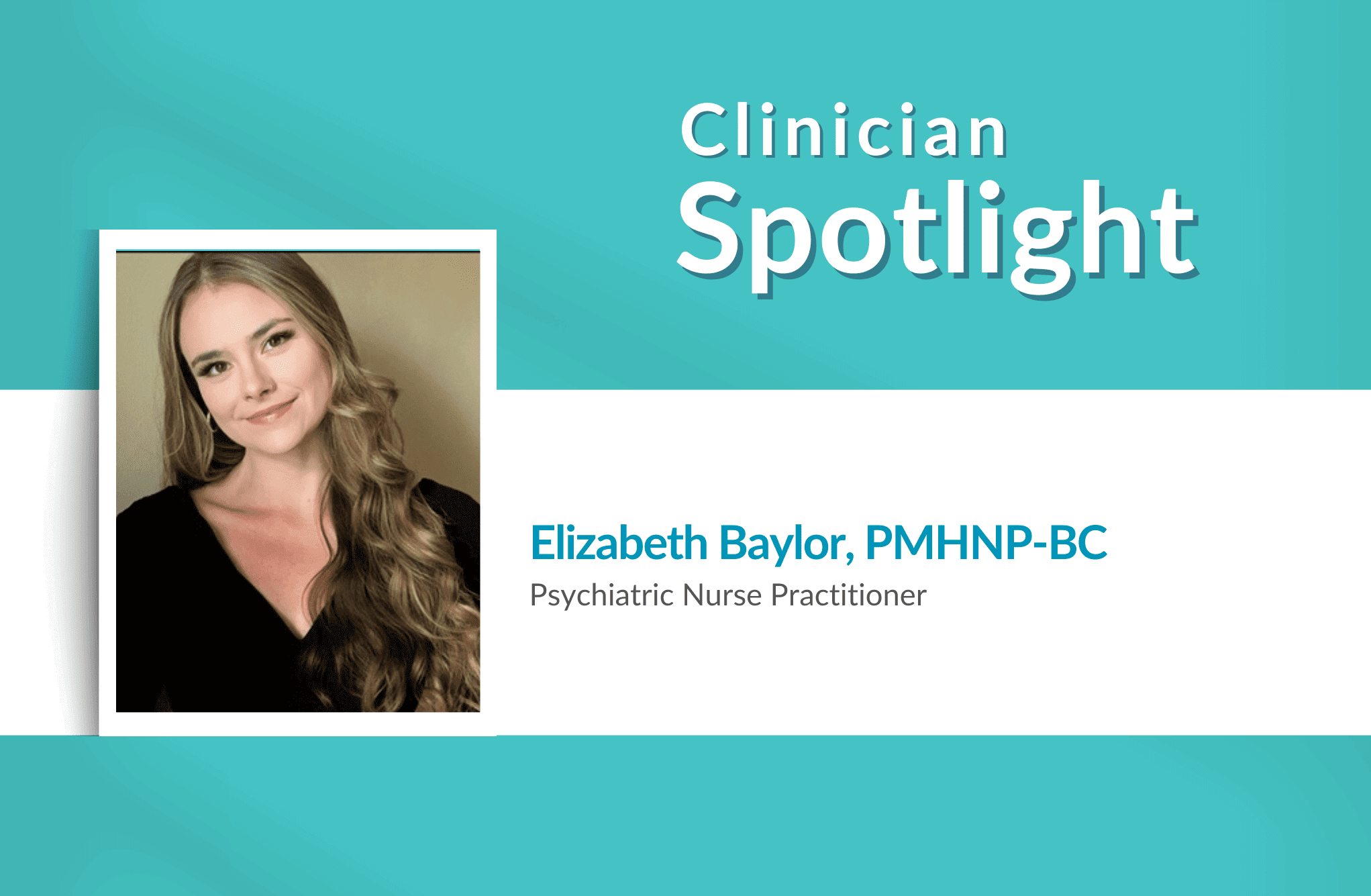
Continuing our clinician spotlights featuring our newest clinicians, today we’re shining the light on Elizabeth Baylor, PMHNP-BC. Elizabeth is a board-certified psychiatric nurse practitioner with a master of science degree in psychiatric mental health from Virginia Commonwealth University. She works with a variety of patients, including those experiencing anxiety, depression, bipolar disorder and schizophrenia spectrum disorders.
Here’s what we learned when we spoke to Elizabeth recently.
Education and Background
Elizabeth first received her bachelor of science in nursing degree from Thomas Jefferson University in Philadelphia before going on to receive her master in nursing, specializing in psychiatric mental health. She worked as a registered nurse (RN) on a trauma stepdown unit, dealing with patients who had endured bodily trauma and patients withdrawing from substances, as well as helping with pre- and post-operative care in surgical services.
“The clinical experience I received during my training was largely with inpatient mood disorder and forensic psychiatric populations,” she explained, “with a specialty serving patients with anxiety, depression, bipolar disorder, schizophrenia, and schizoaffective disorder.” And when she began to work as a psychiatric nurse practitioner, that experience influenced her decision to focus on mental health.
“My experience as a nurse opened my eyes to the lack of resources that exist for many individuals in our communities dealing with psychiatric symptoms and ignited a passion to help clients establish trustworthy and stable care as well prevent hospitalizations,” she said. “I chose to pursue a career in mental wellness because I am passionate about normalizing psychiatric care and providing clients with the support and reassurance necessary to create and maintain a balanced life.”
Specializations and Approach to Therapy
Elizabeth chose to specialize in mood disorders, as well as anxiety, schizophrenia, and schizoaffective disorders. She explained that she made this choice after working with patients who were managing “complex legal issues, usually as a byproduct of a lapse in psychiatric care.”
“For clients with bipolar disorder or a schizophrenia spectrum disorder, early recognition and intervention can improve outcomes and allow patients to learn to manage their symptoms, limiting future episodes.” She particularly loves working with young adults and helping them establish treatment plans that work for them, as well as building long-lasting therapeutic relationships with her clients by working in outpatient care.
“My approach to therapy is to work collaboratively with clients to determine what they need at this stage of life to reach their goals,” she described. “I like to integrate cognitive behavioral therapy, supportive therapy and mindfulness into my sessions. Therapy can be an important opportunity to explore certain thought processes or beliefs that may not align with the individual’s currently held values or goals. I like to create an environment in which they feel comfortable enough to discuss those concepts with me. Therapy ultimately should be a space where patients feel they can express their thoughts and emotions freely and without judgment.”
Elizabeth has seen the effectiveness of therapy both when combined with medication management and without medication. She considers it a valuable tool to include in many treatment plans. “Individuals with any of [anxiety, mood disorders, and schizophrenia spectrum] can benefit from therapy to manage symptoms of the disorder, prevent relapse, identify ways to manage emotions, learn techniques for coping with stressful situations, and find ways to be more present in everyday life.”
Career With Rivia Mind
Elizabeth has been with Rivia Mind since January 2, 2024. “Since joining Rivia, I have loved the supportive and communicative structure,” she said. “There are so many opportunities to be involved in the Rivia culture through special interest groups, educational opportunities, collaborative discussion, and even lighthearted group chats sharing inspirational or fun messages.”
We’re so happy to work with Elizabeth, and her time with Rivia Mind has only just begun!
Advice When Starting Mental Health Treatment
The decision to begin your mental health journey can be a big one. Fortunately, Elizabeth had some words of advice and encouragement.
“Come to the first meeting with an open mind and a willingness to communicate any reservations you may have about seeking mental health treatment. Speak with your new provider about your past experiences with mental health care whether they be negative or positive so you and your provider can both learn from those experiences.” She also suggests looking for providers who you feel you can connect with, who are both communicative and empathetic.
She also adds that clients should understand their mental health treatment could be a long process, and that it might change and evolve as the provider learns more about the client’s needs. “Approach the therapeutic relationship as though you and your provider are on a team working together to find what will work best for you. Seeking mental health care for the first time can be daunting and talking about your life with someone new is often a little uncomfortable. I would encourage patients to give the treatment plan and the therapeutic relationship time to develop and grow. “
Self-Care After Working Hours
Finally, what does Elizabeth Baylor do to take care of herself when not on the clock treating patients? “I love to cook!” she said first. “On the weekends, I get a lot of joy from hosting friends or finding a new recipe to experiment with and enjoy. Right now, my new project is learning how to make sourdough bread.”
She also mentioned that she likes to stay active, attending workout classes to keep her energized and motivated, with a more regulated mood.
Looking for a skilled and compassionate mental health clinician like Elizabeth to help you begin your mental health journey? Rivia Mind is here for you. Contact us today to learn more or schedule an appointment.