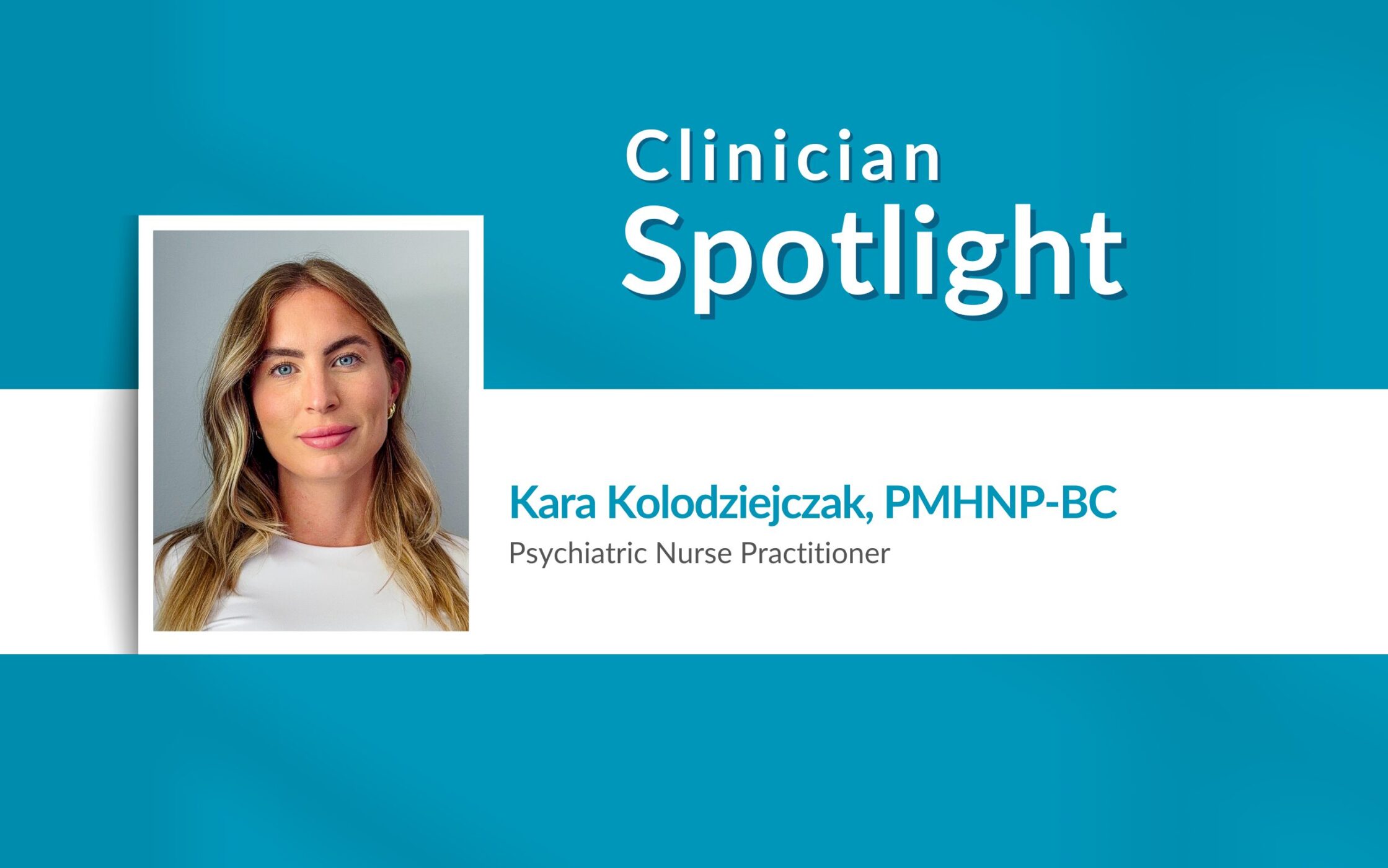
For psychiatric nurse practitioner Kara Kolodziejczak, good care begins with curiosity and deep, active listening. She focuses on the least invasive, most effective ways to ease symptoms and improve quality of life, always working with each patient to find what feels right for them. Kara specializes in mood disorders, substance use, and eating disorders, and often starts by helping people build awareness — understanding why certain behaviors show up and what role they play.
This week’s spotlight explores Kara’s specialty areas, her approach to treatment, and the everyday rituals that keep her grounded.
Specialty & Approach To Therapy
Kara works with a range of mood conditions, including major depression, bipolar and schizoaffective presentations, and cyclothymia, along with substance use and eating disorders.
When the goal is behavior change, she often turns to Motivational Interviewing, which helps people explore their own reasons for change and work through ambivalence. For mood symptoms, she draws on Cognitive Behavioral Therapy (CBT) to identify thought patterns and beliefs, and incorporates interpersonal and social rhythm therapy for those experiencing mood swings or mania, where structure and routine can be especially steadying.
Her style is rooted in connection. She focuses on her relationship with each patient while also helping them strengthen the relationship they have with themselves. She builds a supportive, empathetic space where patients feel heard, respected, and understood. She believes everyone has the capacity for growth and change, and encourages progress at a pace that feels manageable. Whether someone is ready for a big shift or simply beginning to test what might be possible, Kara adapts her approach so new habits feel realistic and sustainable.
Her background includes work in a residential setting with children and adolescents, community mental health, and substance use treatment and detox settings. These experiences mean she has walked alongside people in moments of crisis as well as those seeking steadier, long-term care. She developed an early interest in eating disorders and co-occurring mood disorders, and later expanded her experience in forensic psychiatry and personality disorders. This blend of education, skill-building, and structure helps patients not only understand their patterns but also practice new ways of living day to day.
Advice To Those Seeking Therapy
“Seeking mental health care is beneficial at any stage of life or state of mind,” Kara says. Whether you’re at a low point or simply feeling stuck or lonely, showing up for yourself can be the support that helps you get back up — or reach a new version of you. She reminds people that there’s no such thing as perfect timing: “It is never too soon or too late to ask for help!”
When choosing a provider, she encourages trusting your instincts: “Go with a provider you resonate with.” That connection might come from their biography, training, or even age — whatever feels right to you. If that doesn’t click, she suggests looking for a clinician with experience in your specific concerns so you can benefit from their expertise.
Finding Balance Through Self-Care
After work, Kara’s evenings are about slowing down. “I enjoy cooking dinner, although doing dishes sometimes takes the fun out of it,” she laughs. Sunset is her favorite time to walk the boardwalk, a ritual that helps her clear her head. As the day winds down, she’ll put on a show or pick up a book — “reading puts me right to sleep!” These small, steady routines reflect the same balance she encourages in patients: finding comfort in everyday practices that make life feel a little lighter and more manageable.
If you’re considering support, clinicians like Kara offer a safe place to get started on a collaborative, practical path forward. Browse our providers or reach out to learn more.